How we feed a 12-year-old sourdough starter
February 11, 2026
Maude, our sourdough starter, has raised every loaf since 2014. Her twice-a-day feeding routine, ratios, temperatures, and what we do with the discard.
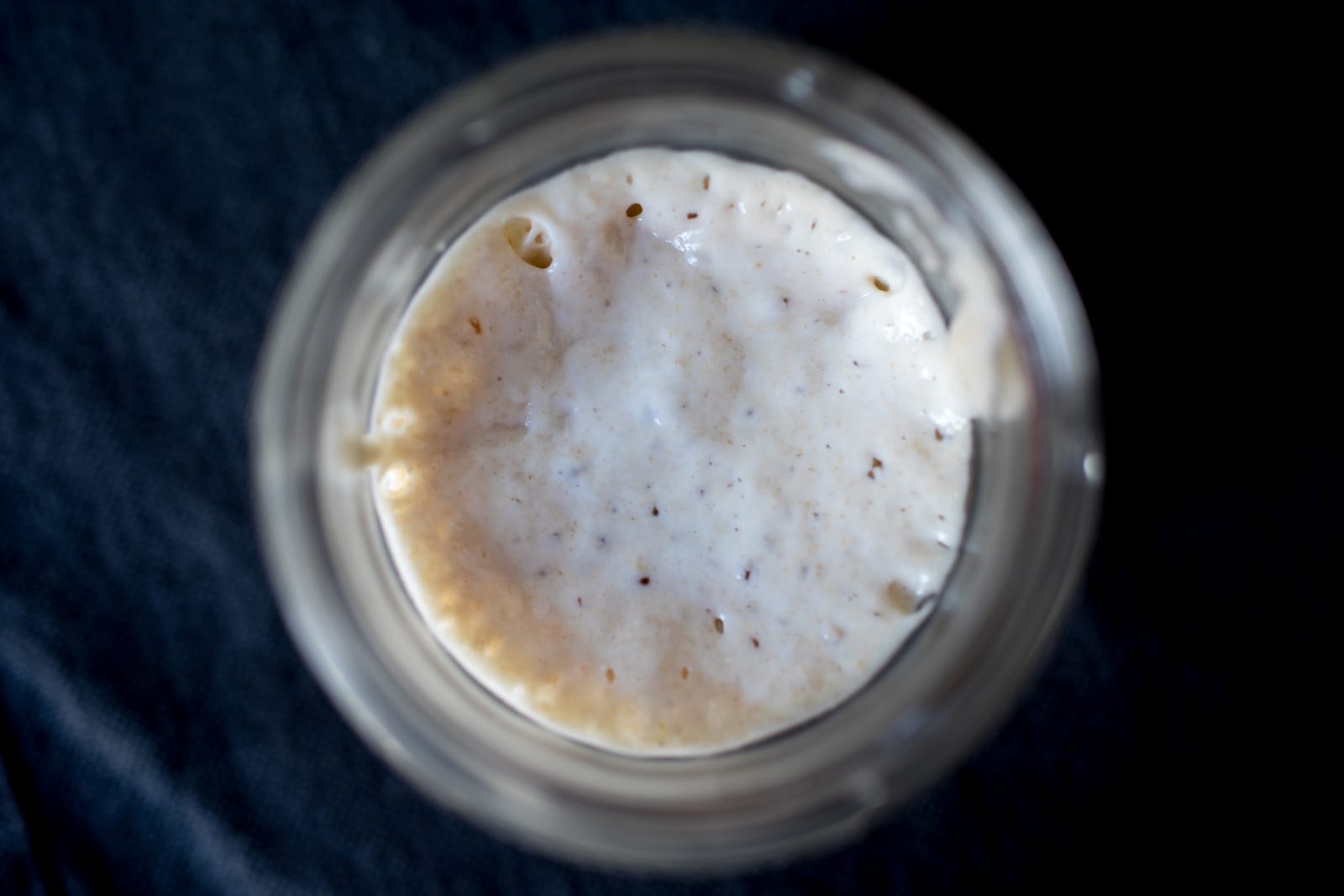
Maude turns twelve next month. Nell mixed her in March 2014 from whole rye flour and well water in a pickle jar, and she has raised every loaf of bread we’ve sold since. People ask about her more than anything else in the shop, so here’s what looking after her actually involves.
What a starter is
A sourdough starter is flour and water that has been left to ferment until it’s full of wild yeast and lactic acid bacteria. Bakers also call it a levain, a mother or a mother dough. The yeast makes the bread rise; the bacteria make it sour and help it keep. Commercial yeast does the first job faster, but it doesn’t do the second at all.
A starter isn’t magic, and it isn’t fragile. It’s a population of microbes that will keep going as long as you give it food and don’t cook it. Twelve years just means twelve years of nobody forgetting.
The feeding routine
Maude is fed twice a day, every day, including the Mondays and Tuesdays when the shop is shut:
- 6:00 am and 6:00 pm. Twelve hours apart, so she peaks roughly when we need her.
- Ratio 1:5:5. One part ripe starter, five parts flour, five parts water, by weight. On a normal day that’s 200 g of Maude, 1 kg of flour and 1 kg of water.
- Flour: half stone-milled bread flour, half whole rye, both from Ridgeline Mill. The rye is what keeps her lively; it carries more of the wild yeast and more for it to eat.
- Water at 80°F (27°C), because the bakehouse runs cool in winter.
- Everything else is discarded or goes into the bread. More on that below.
A high ratio like 1:5:5 means she takes longer to peak, around 10 to 12 hours, and ends up milder. Home bakers usually feed 1:1:1 and see a peak in four to six hours. Both are fine. Ours is set by the bake schedule, not by any rule.
How we know she’s ready
Before the evening feed, Nell checks three things:
- Height. A ripe starter has roughly tripled and just started to sink in the middle.
- Smell. Sharp and yoghurty, a bit like green apples. If she smells of nail polish remover, she’s hungry and we feed her sooner.
- The float test, sometimes. A spoonful dropped in water should float. It isn’t perfect, but on a cold morning it settles an argument.
Then the ripe starter goes into the next day’s dough, and a small piece goes back into the jar to be fed again.
When the shop is closed
People assume starters need constant attention. They don’t, but a bakery’s does, because we need a lot of it and at a predictable time. On Mondays and Tuesdays whoever lives closest comes in at 6:00 and 6:00 to feed her. When all three of us went to a wedding in 2022, Maude went into the fridge for four days on a stiff feed (1:5:3.5, less water) and came back after two warm feeds.
If you’re keeping a starter at home, the fridge is your friend. Feed it, give it an hour at room temperature, then refrigerate it and feed it once a week.
What happens to the discard
Every feed we remove more starter than we keep. Some of it goes straight into the day’s rye dough. The rest used to go in the compost, which bothered everyone, so now:
- Tomás folds some into the ginger molasses cookies.
- We give away small jars of Maude on Sundays. Bring a clean jar with a lid and ask at the counter.
- The rest goes to a pig farmer two towns over. The pigs are, reportedly, very happy.
Taste the result
Maude is in the country sourdough, the seeded loaf, the rye, and the rye and walnut. The menu lists which days each is baked and what’s in it. If you want to see her in person, come on a quiet weekday afternoon and ask; there’s nearly always someone willing to lift the lid. There’s more about Nell and the rest of us on the about page.